Through The Golden Aperture
by Marz Gebhardt
@marzipan2267 @martian.mail
When I was a kid, I used to sit on my bedroom floor with the door cracked open just enough to let a golden splinter of light from my parents’ chandelier slice through the dark. I would watch the glass droplets scatter across the ceiling, splitting into tiny colours that moved with my darting eyes. That was the first time I learned how light could truly change a room - not by being simply luminous but by being noticed. Sometimes I would wait for minutes that felt like hours, tracing the shimmer as it shifted from one wall to the next.
I wrote stories back then- mostly about girls who built new worlds out of somber and fantastical places. My favourite book was Anne of Green Gables- not for the plot but for Anne’s way of noticing, the way she re-names the world so it glows: she calls a willow-lined road 'the White Way of Delight' and a small pond 'the Lake of Shining Waters'. That’s where filmmaking began for me: in the act of noticing something small and realising that was simply enough.
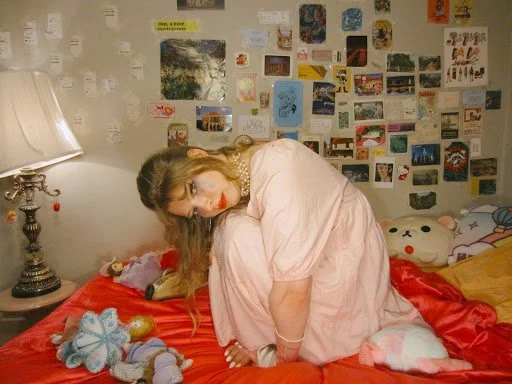
In the 'Heroin(e) Hypocrite' music video, filmed at the tail end of winter, the world just outside my historic prairie apartment was still holding its frosted breath. Inside those brick walls, we gingerly placed candied bugs into the red velvet cake and then into Amy’s mouth. Amy Swallow, a friend, musician, and cyclical collaborator, peeked above the viewfinder when I asked if she was ready and simply grinned, her mouth full of tiny creatures. That first take was the only one we needed.
When I was eleven, my dad gave me a red Canon PowerShot- my first camera. It was small, loud and always ten minutes away from a dead battery but it made sense to me. I filmed family birthdays, faux dramas with my dolls Taryn and Brianna and my friends pretending to be ghosts in the basement. I filmed the ordinary until it stopped feeling ordinary. Most importantly, I learned to film the moments in which I was too shy to speak - letting the lens say what I couldn’t at the time.
As I grew up, the prairie seasons became their own storyboard. Each short film or music video I have created seems to live inside its own weather- shaped by what the light was doing, how the air felt as the sun crept away and what we were even trying to find. In Saskatchewan, the land doesn’t wait for you to be ready for capture. It asks that I match its rhythm - long winters, fervently fast summers and ghostly falls. I learned to work with what’s there: snow as diffusion, dusk as a mood and the ever‑stretched skies as a beautiful constant. Here, filmmaking isn’t about lack- people assume there isn’t enough budget or gear here; what we have is time, weather and community- it’s about looking for what’s already present. Saskatchewan’s creative scene hums with queer and feminine voices, and that chorus shapes how I see and shoot.
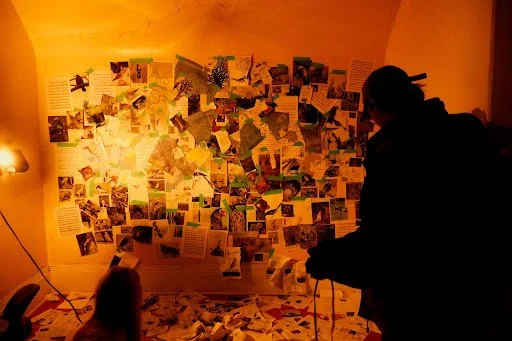
For one of the 'Dry January' sets, we built a campsite on the stage of a well‐loved Saskatchewan bar, O'Hanlon's Irish Pub. A tent, fluffy bird puppets and warm golden light turned what is my community’s musical performance space into something between a memory and a moment. As Riley- a local musician and producer who goes by the name Lova Lamp- leaned against the tent to create shadow puppets, I thought back to the local shows I had witnessed in this spot. Between takes I peeked at the Christmas lights twinkling across the roof. Outside, the snow was starting to break free from expectations of being trampled underfoot. Inside, we were following in the snow’s path.
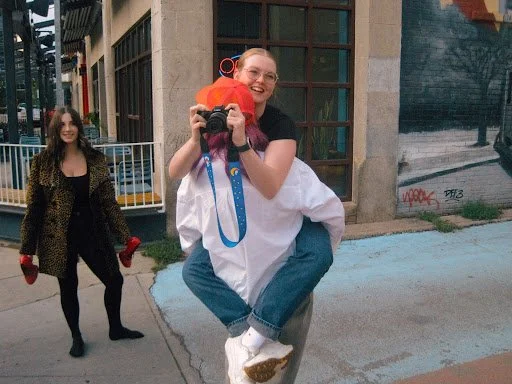
Filmmaking here is about connection. My friends with production, design and music experience offer to provide a second eye in between editing drafts. A friend who loves being present alongside me captures behind‑the‑scenes content for a full day’s shoot. Another friend with a supportive heart helps with props and set design. It is an unspoken kind of care- a shared rhythm that says "I’ve got this part covered so you can do that one." There’s a tenderness to it, a mutual trust that turns the work into art.
The people who show up for these projects all come from different places- different jobs, schedules and corners of life- and they squeeze this in between everything else they are carrying in their hearts. We fit shoots into spare hours, lunch breaks, frozen evenings and whatever other periods of time existing between the pages of life. It isn’t showy or ceremonious. Someone arrives still in their work clothes, someone else leaves early to make a shift, someone does their camera makeup in the car because that’s all the time they had. We work quietly, figuring things out as we go, passing gear and ideas back and forth without needing to explain why we’re here. We just make it happen, and somehow that feels like the truest kind of support.
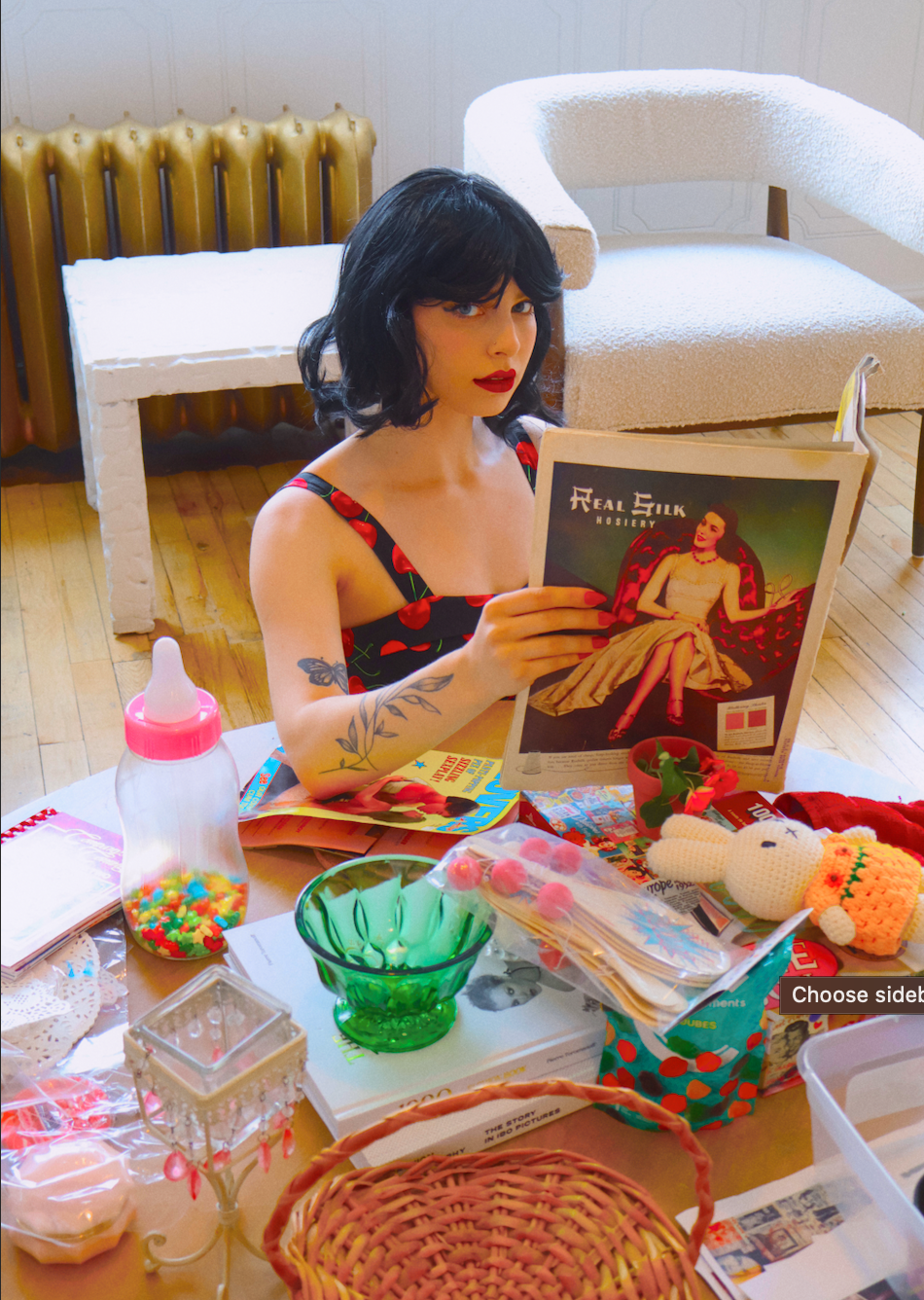
As winter blurred into spring and marked the wrap of 'Baby Back Bitch', the world felt restless once again. At two in the morning, Amy and I sat at her kitchen table, half‐alive but filled with anticipation. I looked to my left and met the lifeless gaze of the full‐scale burlap sack man I had slowly created for this music video. He still sits there to this day. I think he likes remembering the very important role he played as a deadbeat husband.
Working locally has taught me that collaboration isn’t a compromise; it is the heartbeat of my being. I want my camera to hold people gently- to frame without trapping a person in a singular narrative, to look without demanding the attention of all. I listen for where lyrics strike large emotions for the artist and for the flicker of their character’s gaze that is too honest to even predict. That is where I like to keep the lens- on the precipice of one’s deepest hopes and dreams before anyone has time to hide it.
In the ‘Clean’ music video made with Sadie Hawkinz- a local girl band comprised of three darlings named Ella, Zoey, and Malina- we spent three summer days in my apartment, a trailer, and a car, following three close friends through the morning haze and the quiet aftermath of their fictional adventures from the night before. When we wrapped, we drove back through the countryside, headlights carving long lines through the dark and in between the hills. The air smelled like hairspray and dust. The sky moved from pink to blue. It felt like the world was exhaling, like we had finally caught up.
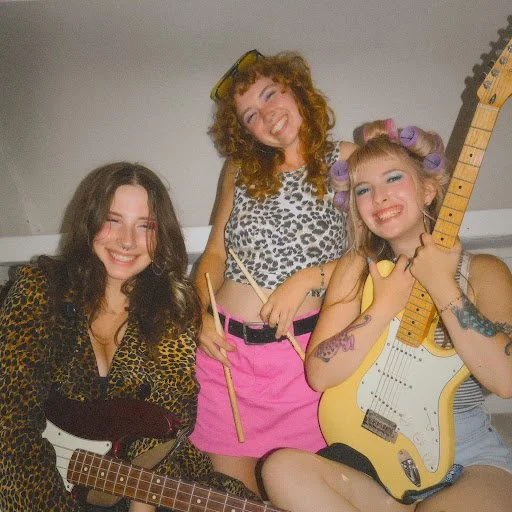
People ask if I will ever move somewhere "bigger". Maybe one day. But for now, this is the place that keeps me looking - not only forward but also around. Saskatchewan’s creative scene hums with queer and feminine voices, each one reshaping what story means here. For that reason, I view Saskatchewan as big, expansive, and just as awe‑worthy as my parents’ chandelier from so long ago. Here, we trade props, equipment, and costumes. Here, we share time, ideas, and ultimately keep each other in the frame. Every music video feels like a conversation - about how we see each other, how we hold what we see and how we let the light keep moving.
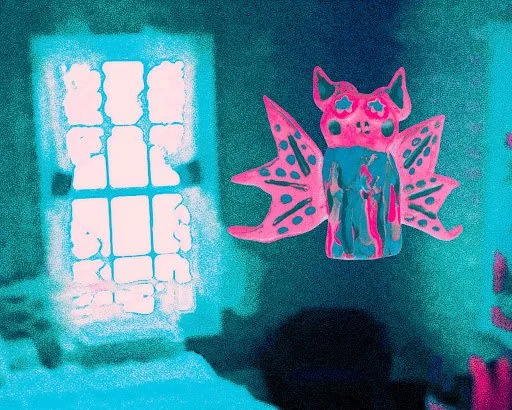
Art doesn’t have to scream to matter. Sometimes art is a whisper, a reflection, or a single lamp in a small room. What lasts isn’t the scale- it is the feeling—the shimmer, the care, the light that keeps changing but never disappears completely. And somewhere inside that faint, persistent glow, I still see that chandelier scattering light across my childhood bedroom’s ceiling.
