Living With Anxiety and Getting in the Driver’s Seat
by Alivia Stonier
Some of my earliest memories are centered around the way that anxiety can make itself known from a young age. Asking my parents repeatedly if things would be okay over the smallest details, a crumb having touched my hand while crawling on the ground, or something not feeling the way that it should.
Anxiety became a certain kind of protector while also being the monster that lingered rather than something under the bed. For a while, it sat in the driver's seat.
Having developed further as I aged, suddenly conversations with people I wasn't close to became so difficult that complimenting somebody's sweater around the age of 12 and 13 would leave me sitting there paralyzed in thought. No longer was I recognizable as the young girl that wanted the lead role in the school play no matter what type of dedication it took to try to secure the role.

I grew convinced that it would be this way forever, getting panic attacks in airports on the way to a family vacation, replaying conversations in my mind over and over until I even lost track of why they were looping. My mind had become a tape that was always rolling, and it wasn't until I began therapy at 17 that I started to stop the anxiety in its tracks.
One of the most effective ways to cope with these fears was to do the things that scared me anyway, as terrifying as that can be. I went from the girl that couldn't even compliment somebody's shirt to less than a decade later being the head of a newspaper and being in charge of an entire team of writers. It didn't come naturally, but it can over time.
At first my voice took me through meetings, my muscles tight as I spoke and learned to be a voice of leadership for other people to look to. As time went on, it began to be a role that I grew comfortable with and allowed me to support other people, and instead of something to fear, it became something to cherish.
The progression happened slowly, but no longer was I a puppet to the strings that anxiety wanted to pull, a heavy tug that never quite knew how to stop fighting.
After talking it through, the panic attacks would stop only happening years in between when things piled up to a point of needing to come out with the only way they remember how, the silent muscle memory built somewhere in my brain and tucked away in case of emergencies like the change from my dad's rainy day fund Coca-Cola bottle.
According to the National Institute of Mental Health, “About 31.9% of adolescents (13-18) will experience an anxiety disorder, with rates increasing to 38% for females.” This silent battle hidden between rashes on the skin or moments lost and thought occurs for a high percentage of young girls.
While over 40 million people in America in general struggle with the disorder. It can be easy for the experience to begin to feel singular, as if you're the only one that has felt the weight within your own mind, but it is far from the truth.

There are many options for relief with this condition; not all hope is lost, as it is found that CBT (cognitive behavioral therapy), which helps to target anxiety through methods including cold water applied to your arms or sour candy being taken and coping mechanisms taught in tandem with talking to a professional, has been found to be up to 80% effective for tackling this mental health disorder.
Especially with today's world, where adolescence ultimately grows up around social pressure more than anybody previously before, where there is an entire world at your fingertips, anxiety has ultimately only increased.
As documented by the Harvard Graduate School of Education, excessive screen time and social media use are directly tied to the rise in anxiety levels. Particularly passive social media use such as scrolling your timeline rather than interacting with peers with more intention behind the use of these tools.
It can be important to remember to disconnect and find other ways to build community around you locally even though it can feel incredibly isolating and difficult to do in the beginning. Something as simple as local events or open mics can be a way to meet like-minded people and feel as though you are connected beyond the screen, which can be difficult for this generation that is losing access to a lot of third spaces, and well, it might be more difficult to seek out and curate, but it is possible.
The anxiety is still a part of me, lingering in the back of my mind as it does for many people, attempting to make itself known in small moments, whether it be conversations with new people or as my worst critic runs its mouth; the key was to stop listening.
My anxiety unfortunately began to have more and more power over me as I entered college, despite the progress that I had made. Taking on new forms that I no longer was used to coping with, intense rumination spirals that wouldn't end even after hours of going over them at nauseam. Needing the very work that I loved to be perfect in order for it to be completed, even if that meant sacrificing the turnaround time on projects, leaving me paralyzed at the very things and towards the very people that I loved.
This would eventually lead to a diagnosis of OCD, and while it is different with other forms of treatment that need to help intervene for the specific diagnosis, it plays in tandem with anxiety in a way that makes it stronger when not kept in check. A diagnosis known for latching on to the very things that you love and care about the most. However, it is still possible to overcome.
I'm still on my journey of not letting my OCD and anxiety pull the strings, and over the past year or so I've been able to make that voice quieter and instead work with me. Though everybody's path will be a bit different, it is important to know that OCD is actually considered far more treatable with the right forms of support.
No longer am I the scared little girl who has to beg for reassurance from my parents at the first sight of something wrong, but she still lives within me and deserves to be given peace. The anxiety became something not fear but a topic to talk about.
One of the most important forms of treatment that helped me was self-work, where you meditate and go within yourself to not only speak to your past versions of who you once were but also to your anxiety itself manifesting as its own being within your psyche.
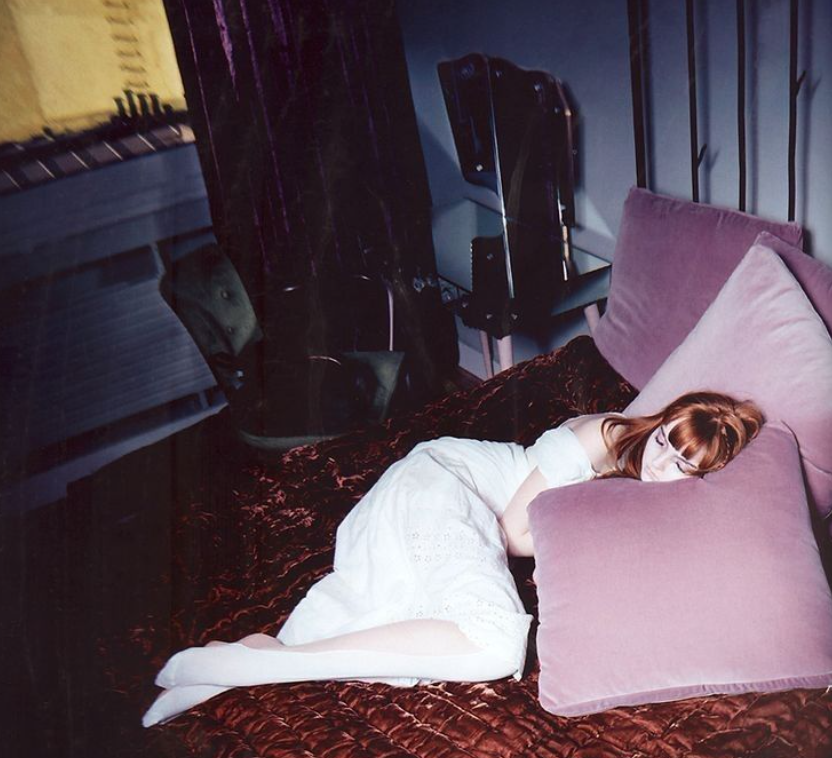
Although it may sound outlandish to some at first, the practice of directly speaking to it, allowing it to take up its own space within my body while directly being in charge, lets things calm in your body, signaling to the nervous system that you have things covered.
For everyone, feeling comfortable within your own mind will take a different shape, whether it be letting the thoughts float away like leaves through a river, simply deciding to let the thoughts be background chatter, or, in some cases, talking to them directly. Although it may feel like a large mountain to overcome, it is possible to get to the other side of coping with anxiety and finally feel relief.
