Do You Need to Change Your Life, or Do You Just Need to Put Your Phone Down?
by Kasey Dugan
Every week, a new it-girl item flashes across my screen, carrying a promise far larger than its price tag: the promise of radical transformation. With the double-click of my Apple Pay button, I too may become the owner of a Hatch alarm clock. Or an orchid plant. Or a highly coveted leather bag from the Grand Bazaar.
These alleged it-girl items are not always blind advertisements. They’re gathered by women in “things I find chic” lists. They’re the screenshots on your phone that you’ve reverse-image-searched for in the depths of Depop or eBay. They’re the purchases you made on a whim, even when your bank account was in the negatives.
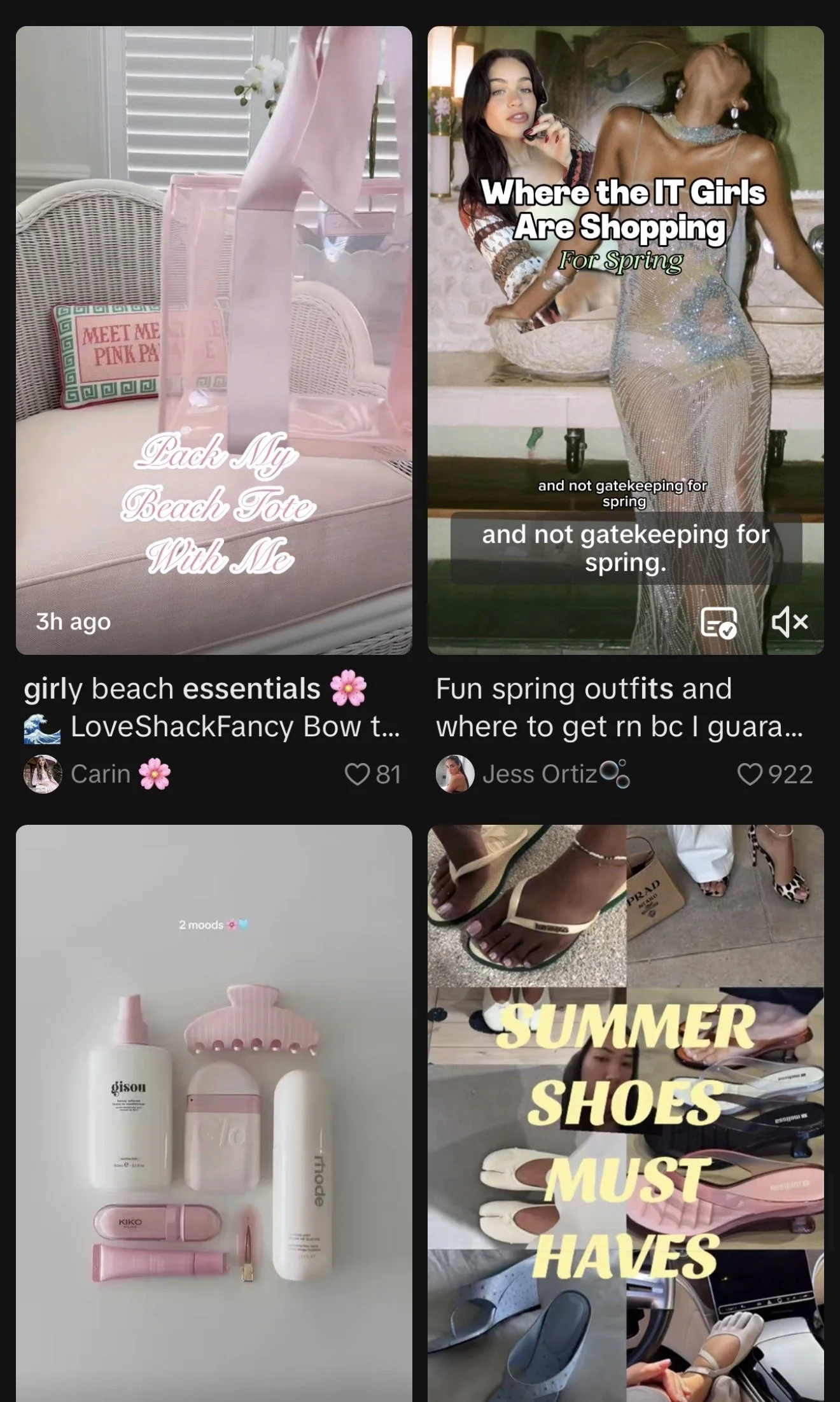
They’re items that have been imbued, for whatever reason, with the mythos that they will take you from tragic to magic — from a girl who's struggling to a “girl who's going to be okay.” A better adult; an adult who has their shit together. A glamorous woman rather than the silly girl you think you are.
This is not a new phenomenon I describe; this, in a nutshell, is consumer capitalism. The framework relies on advertisements to identify a flaw (like aging or body image) and the product offers to solve it.
TikTok, however, has perfected this design. The algorithm continuously scans how you interact with your feed and predicts your next moves. It’s then able to use a predictive feedback loop to push specific videos onto you. Often, these videos are advertisements that have been paired with people who share similar interests and insecurities as you do; it recognizes your vulnerabilities and monetizes them.
Gaucho pants, for example, weren’t trending last spring. But once a handful of smaller brands started gifting them to popular creators—and once you engaged with those videos—you began seeing them everywhere. Gradually, the repetition does its work. One day, you catch yourself thinking, Wait, maybe I need gaucho pants?!
The desire feels organic, as though your personal style is naturally evolving. In reality, the algorithm has been carefully curating that evolution for you. It’s hard not to hear echoes of Miranda Priestly’s cerulean sweater monologue here … except the chain of influence has become faster, more personalized, and far less visible.
We scroll through an endless parade of must-have items all day long. Sometimes we buy them, sometimes we save them to a folder titled “loveee” and forget all about them. But the true commodity isn’t the alarm clock or orchid plant. It’s us. We are the real product here — our attention, insecurities, and aspirations packaged up and sold in return for our relentless pursuit of an ever-receding ideal.
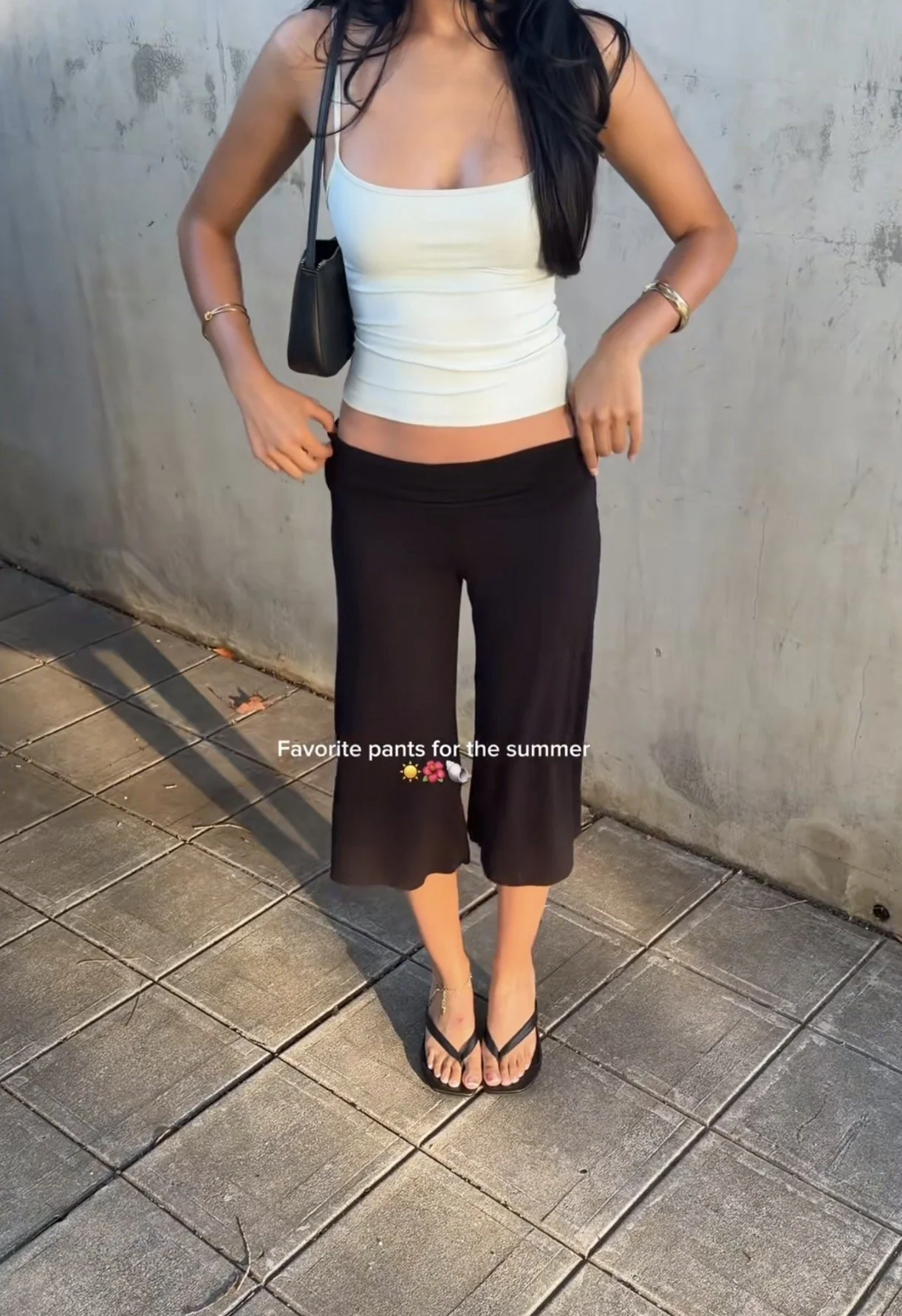
One day, you catch yourself thinking, Wait, maybe I need gaucho pants?!
TikTok, Instagram, or even Poshmark makes it seem that fulfillment is always one purchase away. It’s why we tell ourselves that if we just had the right shoes or the right lipstick, we might become the woman we’re meant to be.
I wish it were so easy.
As we approach the summer months, the algorithm will continue to prey on women’s insecurities. The trips we can’t afford to take, the date-night dresses we can’t seem to find, and especially the bathing suits we didn’t know we needed. Each time, it will pitch a product with the promise that your better self is just around the bend.
Becoming a better person isn’t necessarily the problem. The problem is listening to systems that make us feel unfinished in the first place.
So this summer, before shelling out on the next big trend, try something simpler: step away from your phone. Take a walk. Talk to your neighbors. Get bored for a change. Become familiar with who you are when nobody is measuring, analyzing, or targeting you. You might just find you don’t need a new persona at all … just a little more distance from the machines trying to sell you one.
